
When you hear the name Albert, a dozen faces might flash through your mind—a wild-haired physicist, a German prince, a jazz legend. The name carries weight. It's not just a label;it's a thread woven through centuries of achievement, controversy。and quiet brilliance. Consider Albert Einstein, the most obvious association. His 1905 papers didn't just revolutionize physics;they shattered the notion that space and time were fixed stages. But Einstein was also a stubborn realist who spent his later years resisting quantum indeterminacy, a stance that left him somewhat isolated from the mainstream he helped create. I find that tension fascinating—the same mind that redefined gravity could also dig in his heels against the new orthodoxy. That's the thing about the name Albert: it rarely denotes a simple figure.Step back a few centuries and you meet Prince Albert of Saxe-Coburg and Gotha, Queen Victoria's consort. History often reduces him to a dour figure in a frock coat。
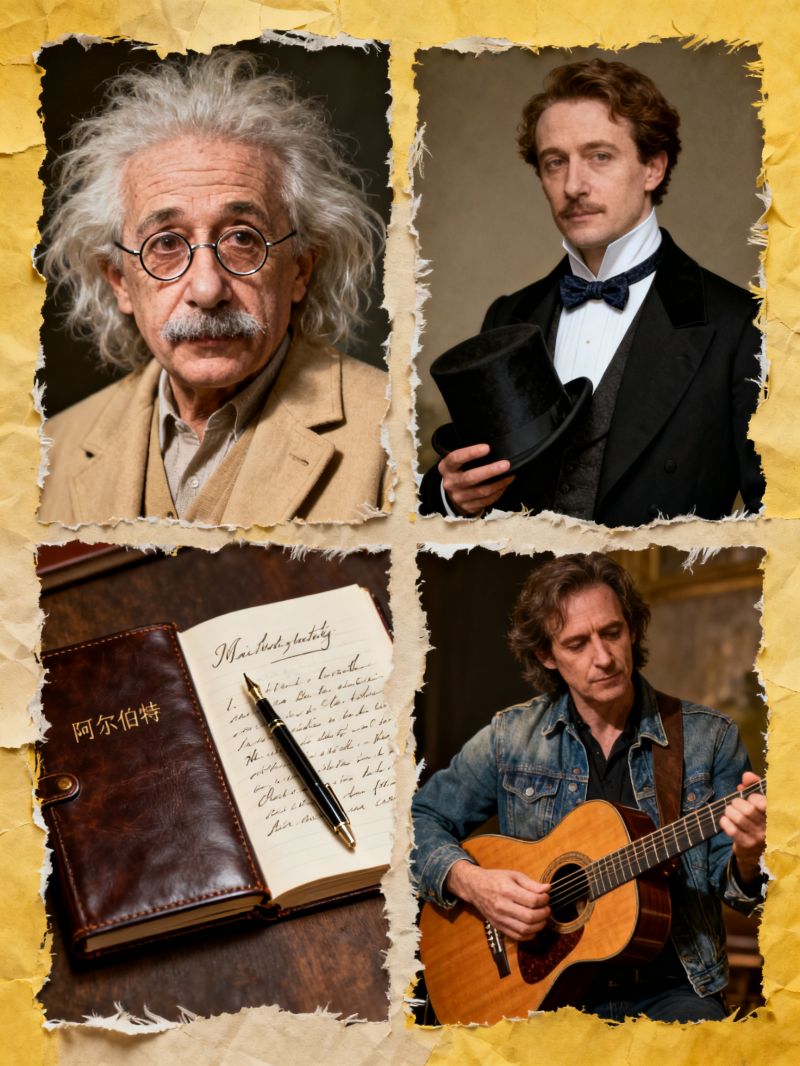
but he was a relentless modernizer. He pushed for the Great Exhibition of 1851, championed educational reform, and managed the royal household with a businesslike efficiency that unsettled the aristocracy. A friend once described his energy as 'restless and practical.' That phrase fits. Prince Albert's legacy isn't just monuments;it's the idea that public duty and intellectual curiosity can coexist. Without him, Victorian Britain might have been a little less inclined to look outward. I've walked past the Albert Memorial in Kensington Gardens—it's over the top, sure, but it captures a man who tried to turn royal privilege into public good.Then there's Albert Camus, the philosopher who insisted that life's absurdity is no excuse for despair. His novel The Stranger opens with a death that feels like a shrug, and yet Camus spent his whole career arguing for revolt, for solidarity, for the stubborn act of choosing meaning. He died young, in a car crash, at forty-six. A notebook found in his bag contained an unfinished autobiographical novel, The First Man, which reveals a tenderness often missing from his published work. That discovery changed how I read him. The public intellectual who wrote about Sisyphus was also a man grieving his illiterate mother, trying to understand her silence. Camus's Albert is the one who reminds us that philosophy isn't abstract—it's personal。messy, and often unfinished.
Music has its own Albert: Albert King, the left-handed blues guitarist who played his Flying V upside down and sang with a gritty, pleading tone. He wasn't as famous as B.B. King, but his influence runs deep—Eric Clapton and Stevie Ray Vaughan both cited him as a crucial inspiration. King's style was deceptively simple;he bent notes with a force that could make a single string sound like a full horn section. I once heard a live recording of 'Born Under a Bad Sign' where his guitar seems to sigh. That's the kind of detail that gets lost in retellings. Albert King didn't need flash;he needed feeling. The name Albert。in this context, stands for something raw and unpolished—exactly the opposite of Einstein's theoretical elegance.What ties these Alberts together?A willingness to go against the grain, perhaps. Einstein questioned Newton;
Prince Albert questioned royal inertia;Camus questioned suicide as a logical response to absurdity;Albert King questioned the conventional way to hold a guitar. None of them fit neatly into their eras. They were, in their own ways。
outsiders who reshaped the inside. The name itself comes from the Old German Adalbert, meaning 'noble and bright.' That's a flattering translation, but it misses the grit. Nobility of thought, brightness of execution—sure. But also stubbornness, eccentricity, and a refusal to accept the obvious answer. Next time you meet an Albert, don't assume you know what you're getting. The name has a history of surprises.